Tangible Co-Ideation: Designing Embodied Prompting for Creative Thinking with Large Language Models
A tangible ideation system that turns prompting into a spatial, physical design activity instead of a linear chat exchange.
Demo Award at ACM CHI 2026; finalist at ACM DIS 2026 Student Design Competition; full paper submitted to ACM CHI 2027
Overview
Reframing LLM prompting as embodied creative thinking rather than text entry.
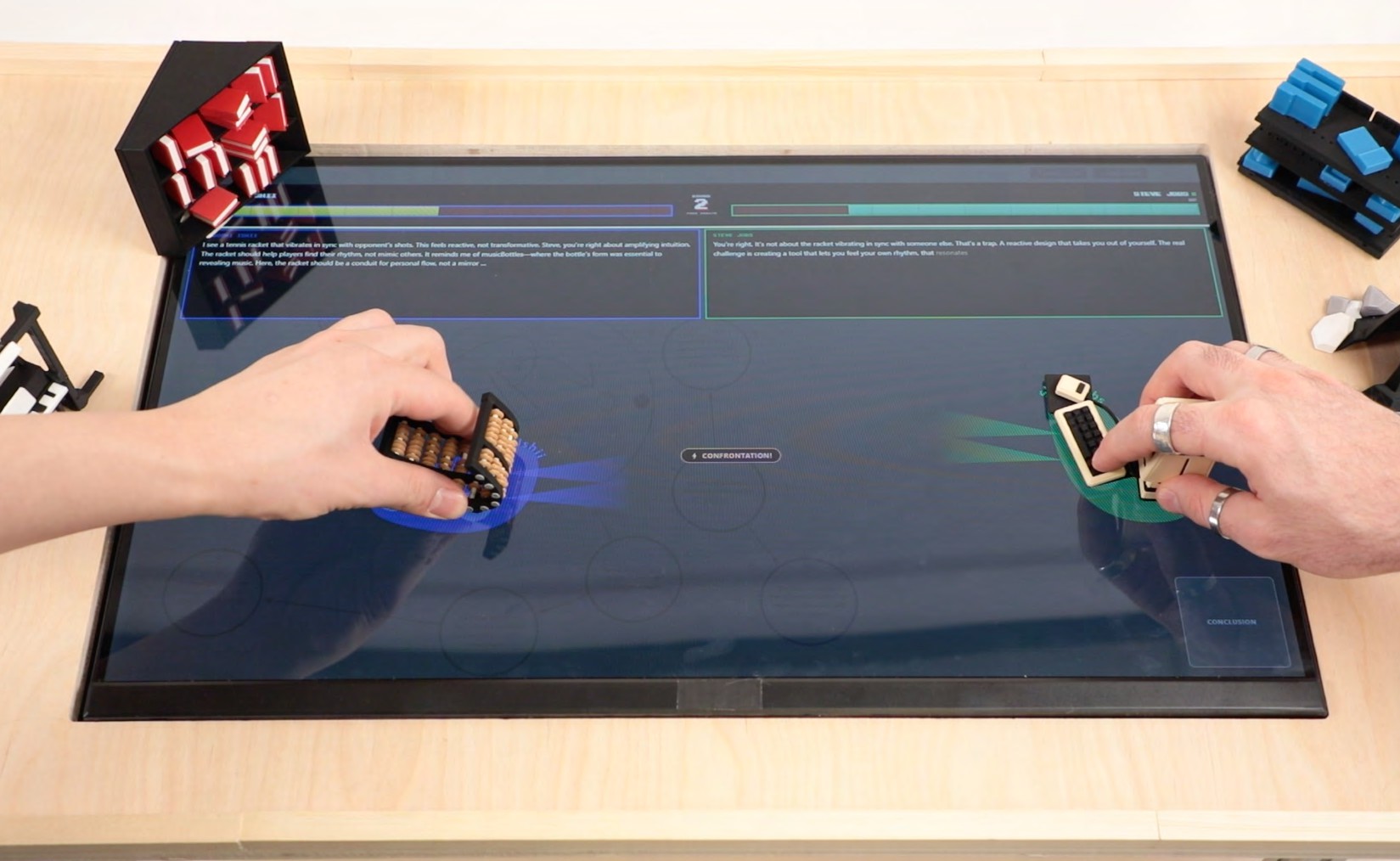
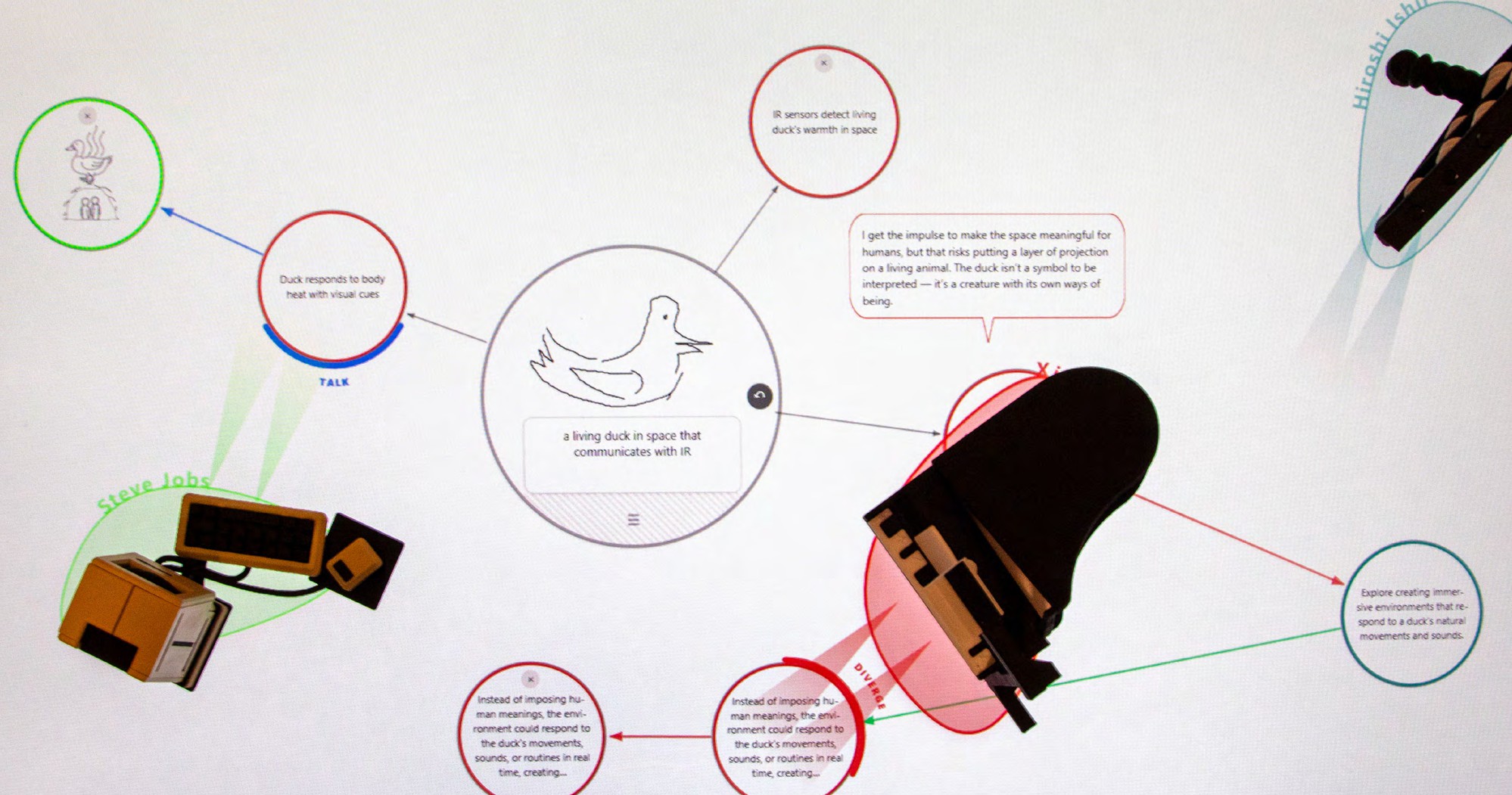
- Embodies AI expert personas as figurines to shift prompting from text to spatial reasoning.
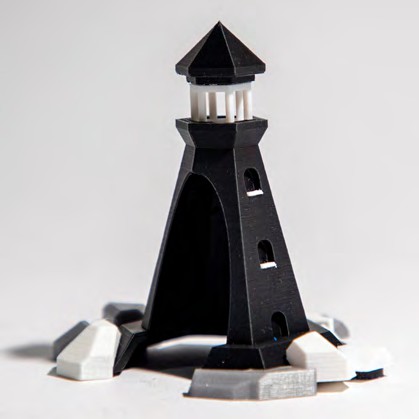
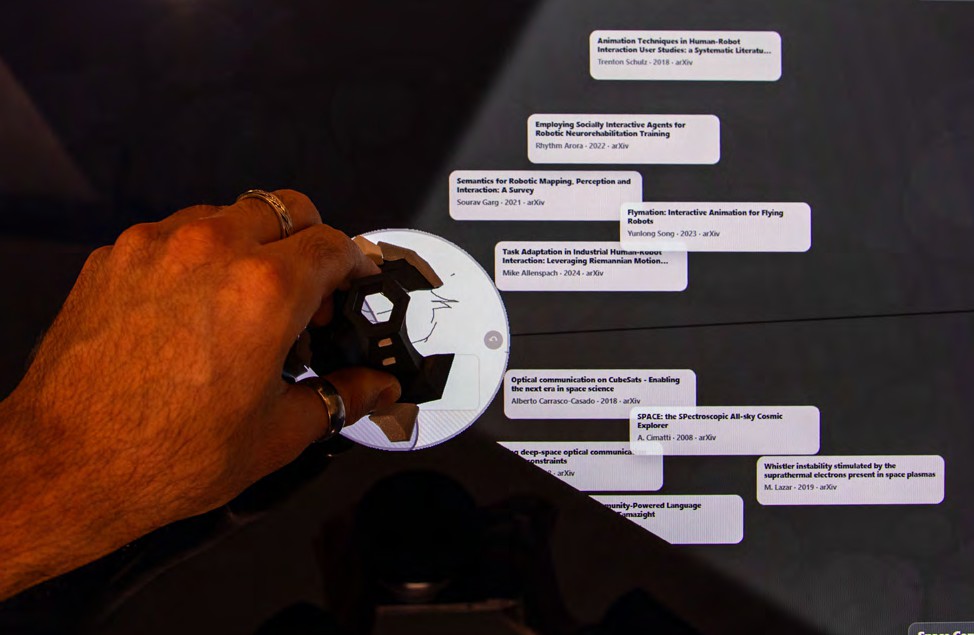
- Uses a lighthouse object to surface related work during ideation without collapsing the whole process into a chat thread.
- Introduces goal tokens to steer summarization and evaluation while keeping the human in charge of meaning-making.
- Builds on RAG, prompt engineering, and tangible sensing to support divergent and convergent design cycles.
Why this project exists
The submission starts from a simple tension: designers rarely think in a neat sequence of sentences, yet most LLM systems still force them into a chat box. Tangible Co-Ideation pushes against that constraint by giving ideation a spatial, embodied interface.
The project frames prompting as a creative material. Instead of writing longer prompts, people compose perspectives, goals, and references through physical objects that can be moved, rotated, and combined.
The tangible prompting system
Three families of objects structure the process. AI Expert Personas act as embodied viewpoints, letting a concept be critiqued through different value systems. A lighthouse object helps search and retrieve relevant work during brainstorming. Goal tokens encode evaluation criteria so summarization and reflection stay visible and adjustable.
Together, those objects make ideation feel more like arranging a design conversation in space than issuing commands to a chatbot.
Technical direction
The paper describes an AI pipeline that combines curated knowledge, prompt engineering, and retrieval across papers, talks, sketches, and prior conversations. It also explores conductive and capacitive tangible sensing as a more expressive alternative to marker-based tracking.
That technical layer matters because the goal is not only to make AI more playful, but to support critical engagement and keep the human meaningfully inside the loop.