Finger Spies
A one-dimensional spy role-play game where players move through a laser corridor while trying to identify the hidden double agent controlling the light.
Built in the MIT 4.043 Design Studio: Interaction Intelligence ecosystem
Overview
Minimal interface, maximal tension: one row of pixels, one hidden traitor.
- Turns a single row of pixels into a social deduction game with red-light, green-light timing.
- Builds tension through strict 1D interface constraints rather than complex graphics.
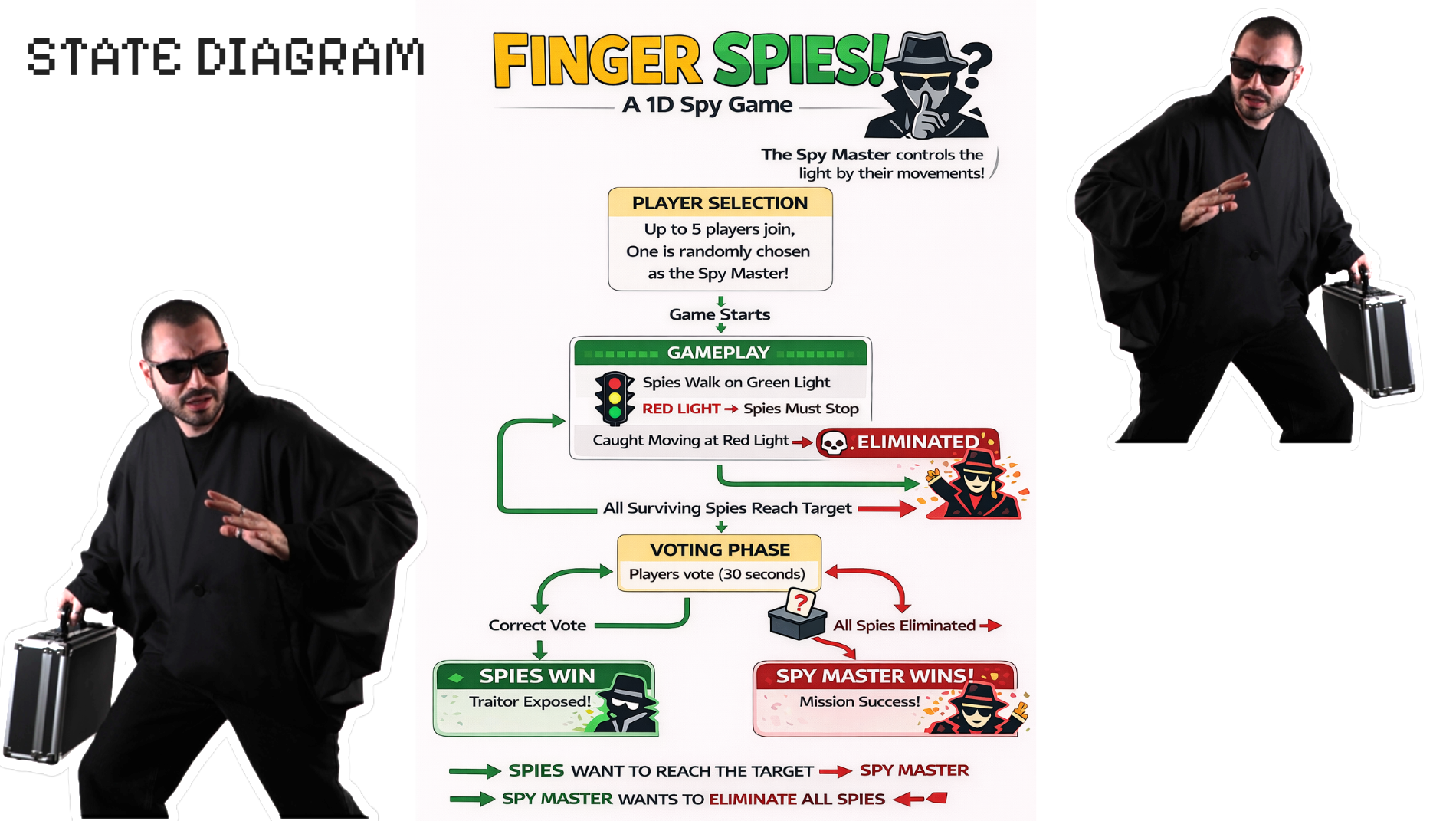
- Uses clear state-machine logic for selection, play, voting, and win conditions.
- Extends the MIT 1D interface design language into a complete role-play system.
Game premise
Finger Spies is a spy role-play game played on a one-dimensional interface. Each player advances one pixel at a time while a hidden double agent controls whether the light is safe or lethal.
That setup creates a surprisingly rich social space out of almost nothing: bluffing, hesitation, rhythm, and voting all become legible because the interface is so stripped down.
Interaction logic
The README emphasizes how the project is organized around states and relationships. Player selection, play, vote, and win conditions are all treated explicitly, which keeps the behavior readable and extensible.
That design discipline is one of the strongest aspects of the project: the game feels playful, but its structure is precise.
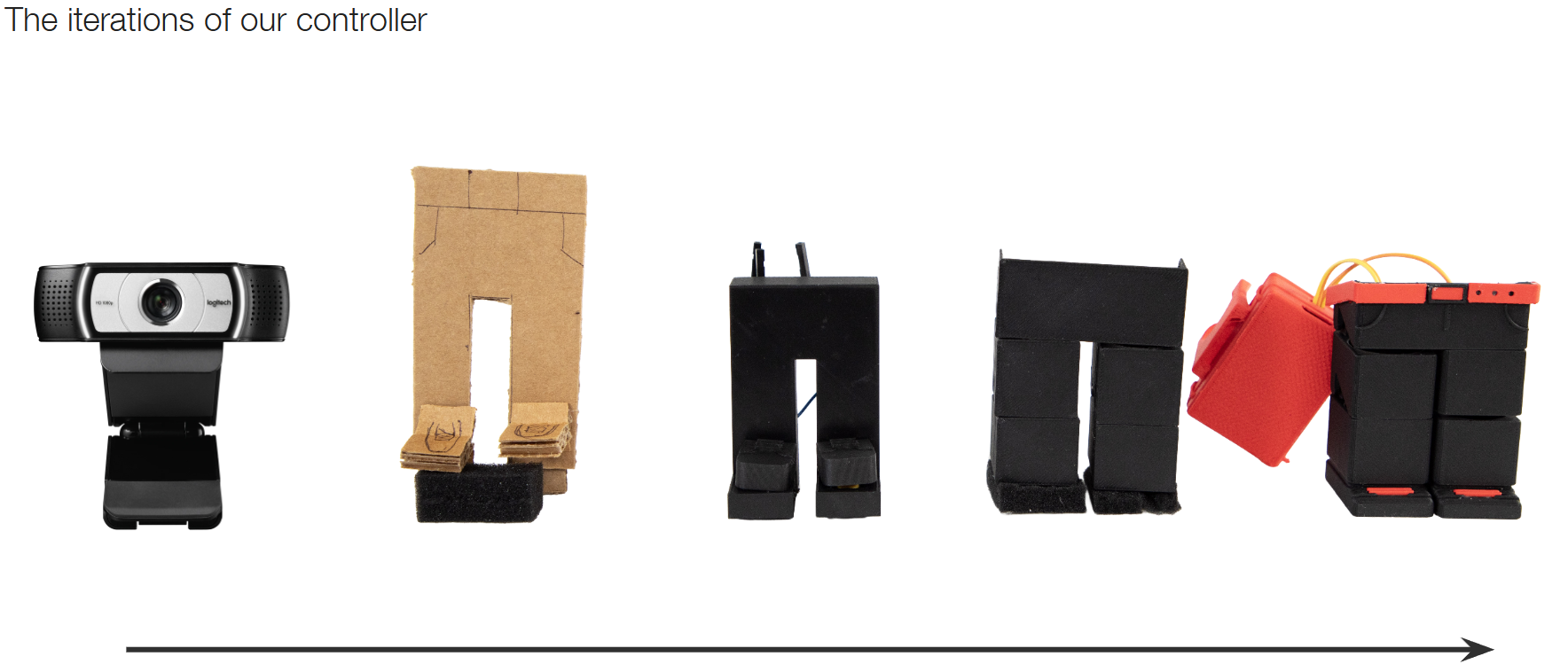
Artifacts and physical framing
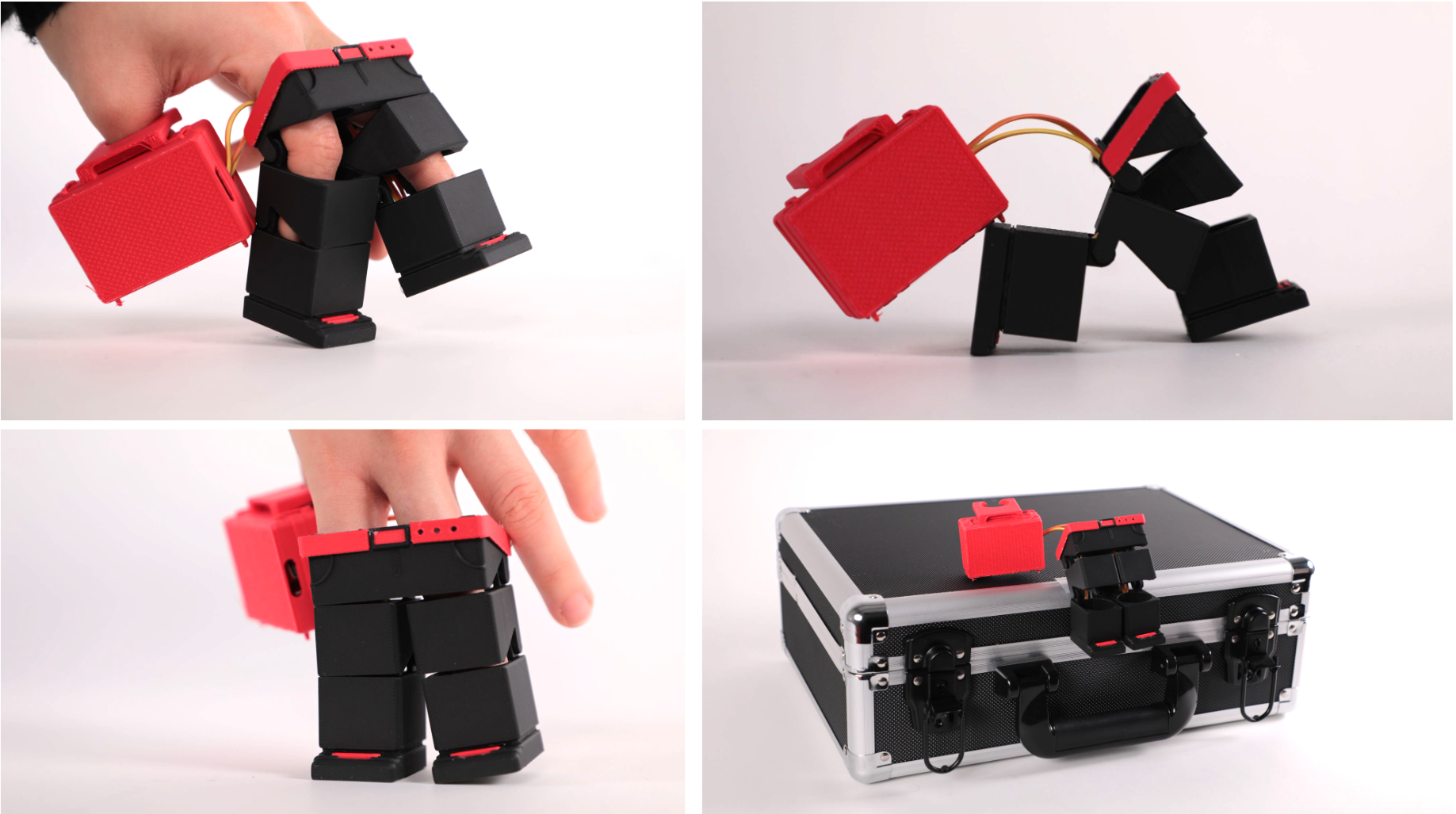
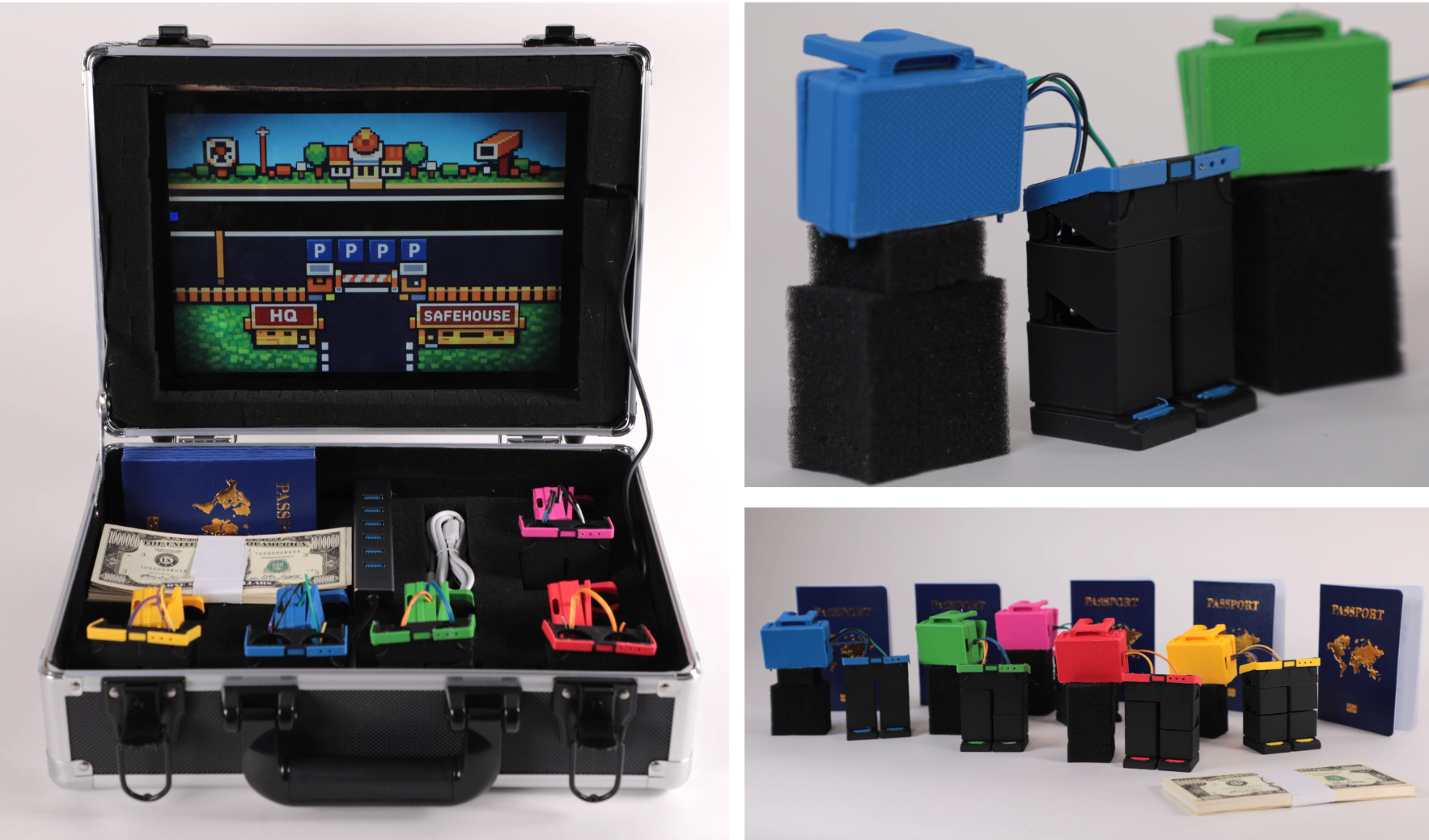
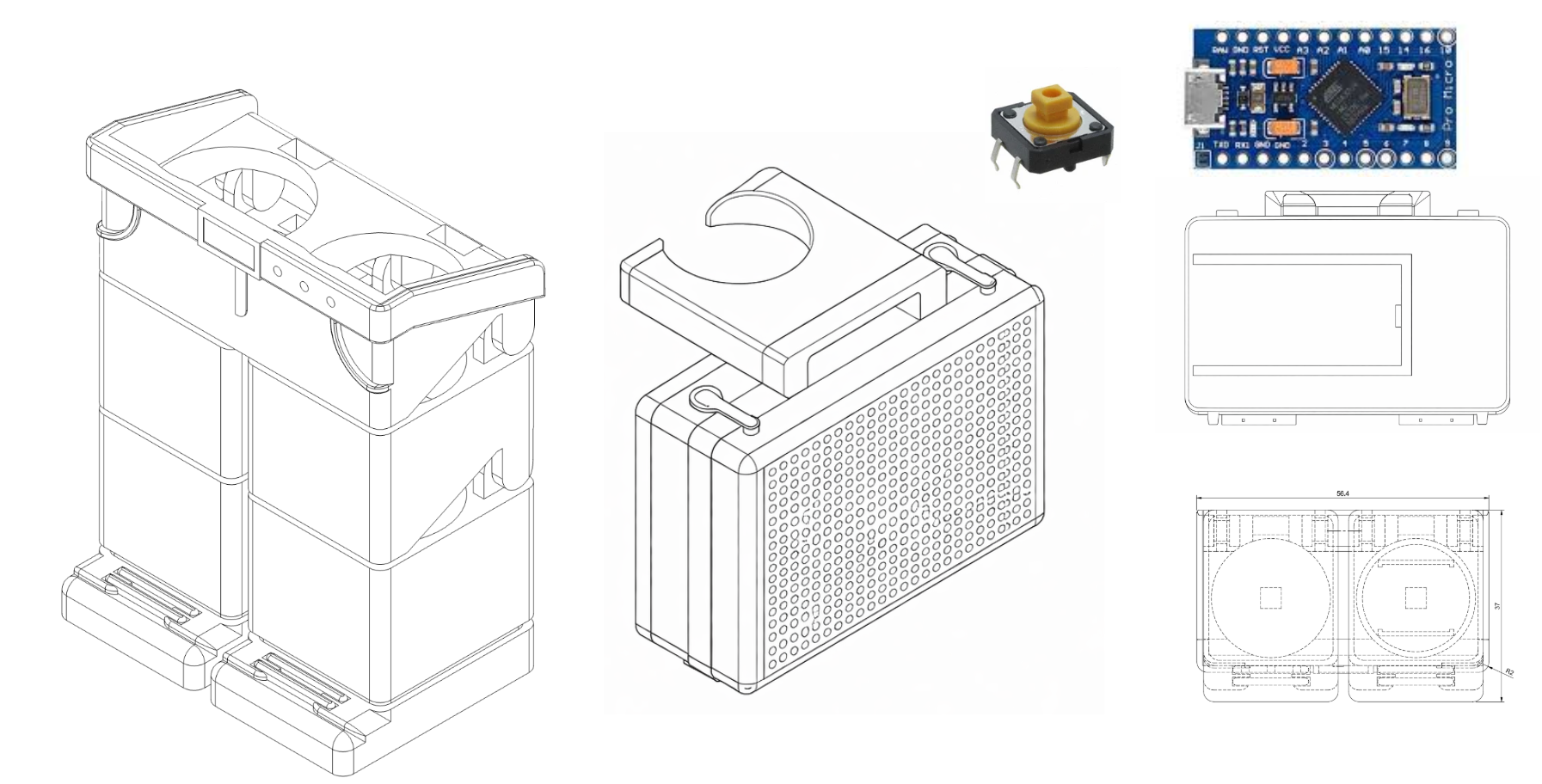
The local folder includes controller studies, technical drawings, and packaging views that make the project feel like a full interaction-design artifact rather than only a browser prototype.
Using the hero image first and the gameplay video early helps the page communicate that mix of concept, rules, and physical presentation.